
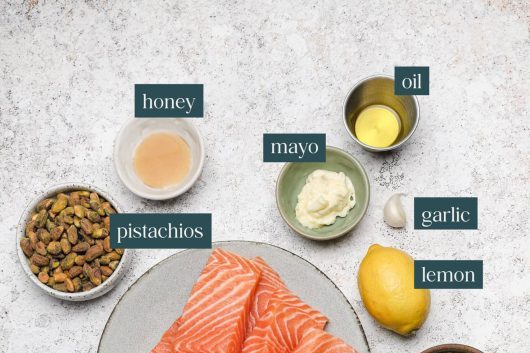
This is the dish I make when someone is coming over and I want the kitchen to look like I tried harder than I did. It is one tray, forty-five minutes, and almost all of that is the oven working while I do something else.
The pistachio crust is doing two jobs. The obvious one is crunch against soft fish. The quieter one is insulation — a layer of chopped nut and breadcrumb over the top of the fillet slows the heat reaching it, so the salmon comes out of a hot oven still faintly translucent in the middle rather than chalky. That is also why the crust wants to go on thick and be pressed down properly. A thin scattering browns and falls off; a firm layer stays put and shields what is underneath.
The mustard is glue, not flavour
A tablespoon of Dijon spread over the fillet before the crust goes on is the only thing standing between you and a tray of loose pistachio. You will not taste it in the finished dish. Skip it and the crust slides off the moment you lift the fish with a spatula, which is a sad thing to watch happen to good salmon.
Dry the fillets first. Salmon straight from the packet carries a film of moisture that will keep anything from adhering, mustard included. Thirty seconds with a piece of kitchen paper is the difference between a crust and a garnish.
Dress the quinoa warm
Quinoa is famously bland and it does not have to be. The trick is when you dress it, not what you dress it with. Warm grains take on lemon and oil readily; cold ones sit in the dressing and stay separate from it. So fluff it, then fold the lemon, oil and herbs through while there is still steam coming off the pan.
It also takes far more salt than feels reasonable. Season it, taste it, and then season it again — the herbs and lemon will read as flat until the salt is right, and no amount of extra dill will fix that.