
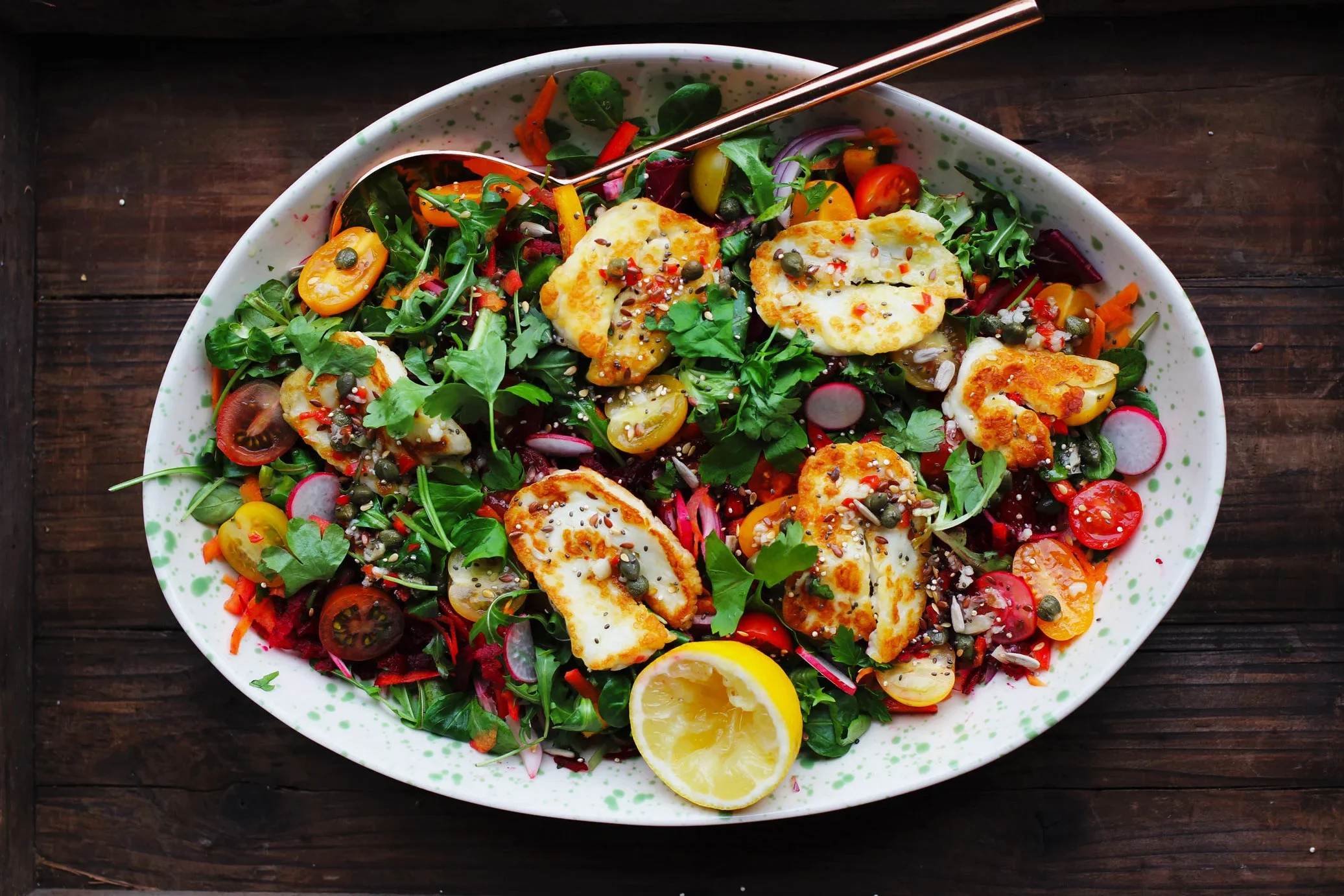
A plate rather than a bowl, and arranged in sections rather than tossed, because half the pleasure here is being able to see what you are about to eat. Mix it all together and it becomes one brown-orange thing. Leave it in stripes and it looks like the reason you cooked instead of ordering.
Leave the halloumi alone
Halloumi goes into a dry pan on a high heat and then you do not touch it for two full minutes. This is harder than it sounds. The urge to nudge it, check it, reposition it is strong, and every nudge breaks the contact between cheese and metal that the crust needs to form.
No oil, either. Halloumi carries enough fat to release its own, and adding more just gives the surface something to sit in rather than sear against. What you want is the cheese in direct contact with hot dry metal, undisturbed, until it has built a golden face and lets go of the pan by itself. If it is sticking, it is not ready.
The dressing will look ruined. It is not.
Whisk lemon juice into tahini and it seizes — goes stiff, pale and grainy, like it has split. Everyone panics the first time. Keep going and add cold water a spoonful at a time, and it loosens back into a smooth pourable cream that is thicker and glossier than it was before the lemon went in.
It always looks wrong before it looks right, so make it before you need it and you will not have to hold your nerve with hungry people watching.
Roast harder than feels polite
Sweet potato is worth pushing until the edges genuinely catch and darken. Pulled out pale, it is sweet and one-note; left until the corners go almost too far, it picks up a bitter edge that keeps the sweetness in check and stops the whole plate reading as dessert-adjacent. Give the cubes room on the tray — crowded, they steam each other and never get there.